Monday, November 28, 2022

RAVI URBAN DEVELOPMENT AUTORITY (RUDA):

ESSAY 

The Punjab government recently directed the Lahore Development Authority to lay the groundwork for establishing an independent Ravi Urban Development Authority (RUDA). Initially, the new government body was being planned under the aegis of the LDA, however, this plan was later scrapped. Reportedly, if the new authority is developed as an independent government entity, then it will have its own governing body and it will be responsible for establishing a new city along the Ravi riverfront. Previously, the RUDA was supposed to be similar to the WASA and the Traffic Engineering and Planning Agency. Now it will be a separate authority and the LDA has already been directed to prepare the paperwork for the purpose.

Sustainable development goals:

The unsustainability of the Project from an ecological, environmental and financial perspective argued by the Society seems to reflect a myopic view of the ever-changing and developing world, especially in view of the ever-increasing population of Lahore, a provincial capital. It is submitted that the Project has been conceived in line with the Sustainable Development Goals (SDGs) of the United Nations (UN). Under the 2030 Agenda of the UN, the economic, social and development dimensions of “sustainable development” are to be integrated in harmony. They are to be construed as a whole and not in a fragmented manner. One goal should not encroach upon other goals and if we examine SDG 17 (global partnerships and cross-sector collaboration), the Project aims to accomplish a majority of the goals listed under it by providing state-of-the-art infrastructure and facilities, sustainable communities, job opportunities and further healthcare and educational opportunities to its residents. Moreover, the Society’s argument with regard to the Project’s potential detrimental effects to the environment is also frail as the Project intends to plant vegetation around the current barren lands of River Ravi and help with its sanitization and treatment, which even the River Ravi Commission has, to date, been unsuccessful with.

Sustainable development is no doubt an evolving concept and it is noteworthy to mention that under our domestic law the Supreme Court of Pakistan has taken a pragmatic approach in its landmark judgment pertaining to an environmental issue

Ecosystem

The Project also claims to value the ecosystem of River Ravi and appears committed to legally resolving any environmental impediments for the betterment of its development. Moreover, its concept is not only in sync with the hortatory non-binding goals of the United Nations but is also supported by the doctrine of precedent of our Supreme Court.

The argument that the channelization of River Ravi is against the principles of sustainable development and ecological sustainability has little weight at this point. Whether or not any purported channelization of River Ravi will affect the ecology of the River is a question to be determined by the relevant experts and consultants in the field. Their recommendations in this regard shall be implemented in the execution of the Project. During the Environment Impact Assessment (EIA) process, such reports should be presented to the concerned agencies for their approval under the Punjab Environment Protection Act 1997 (PEPA 1997).

Moreover, the Society’s argument that riverbanks are an integral part of the river ecosystem and the hydraulics of rivers where there is no defined edge should be maintained, is to be decided upon after comprehensive reports by the relevant experts and consultants in the field. During the EIA process, such reports will be presented to the concerned agencies for their approval under PEPA (Pakistan Environmental Protection Act).

The reality of River Ravi is that it is currently a “sewage nullah”, as quoted by the Prime Minister. The benefits of implementing the project outweigh the environmental concerns being stressed upon by the Society. Any environmental damage apprehended at this point is pure conjecture. A proper EIA should be carried out before the execution of the Project and all matters pertaining to the environment and ecology of River Ravi and its surrounding topography should be addressed through the proper medium, as per the regulatory laws of our land. The Project is essential for the sustainable development of Punjab and will save River Ravi from further damage.

Drawbacks of RUDA

The bulldozers came at the crack of dawn, and they came with no warning. As they rumbled through farmland with the watery September sun at their backs, they were accompanied by a small army of private guards and officials from the Ravi Urban Development Authority (RUDA). Tenants and landowners that farm the land watched on with resignation while their crops were destroyed, and waterways blocked. 

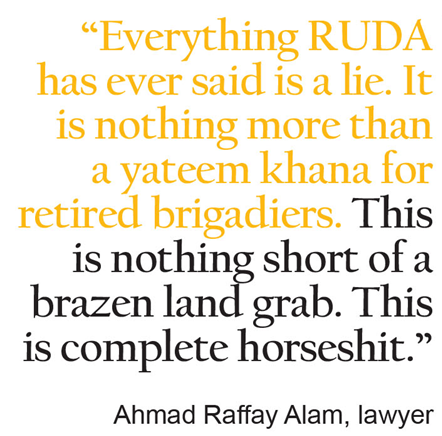
The Ravi Riverfront Project is many things. At its best, it is a vein, bloated, misguided attempt that many environmentalists and hydrological experts have called an impending ecological and social disaster. At its worst, it is an uncaring attempt to turn the Ravi and its embankments into a playground for real estate developers that intend to treat it as a cash-cow for at least the next two decades

For better or worse, it has become a bone of contention with political undertones. A pet project of former prime minister Imran Khan, it was declared illegal and unconstitutional by the Lahore High Court last year and has recently been given reprieve by the Supreme Court. That verdict in addition to the PTI back in charge in Punjab may be what is behind the latest attempt by RUDA to seize lands that they claim they have legally acquired and which the owners of these lands say have not been.

CONCLUSION:


Friday, November 25, 2022

WHY NATIONS FAIL By Daron Acemoglu and James A. Robinson (CHAPTER 5)


"I'VE SEEN THE FUTURE AND IT WORKS":
GROWTH UNDER EXTRACTIVE INSTITUTIONS

In this chapter’s first section, “I’ve Seen the Future,” Acemoglu and Robinson note that most societies have had extractive economic and political institutions but have still managed to achieve some economic growth. However, this growth is based on existing technologies, while growth in inclusive societies is based on technological change.

Extractive political and economic institutions are designed to benefit the elite class that holds power in society. These institutions do not benefit the majority of citizens (who are better served by inclusive institutions). Specifically, extractive political institutions give the elite a monopoly on power by excluding the majority of society from government. In turn, the elite class uses these political institutions to create and sustain extractive economic institutions that enrich its members. These extractive economic institutions are harmful to the majority of society: they impoverish it, restrict its economic rights, and limit its opportunities.

Like most economists, Acemoglu and Robinson believe that free, open markets are the most efficient way to allocate limited resources because they allow everyone to pursue and fulfill their individual preferences. In contrast, while centrally planned economies can excel in certain sectors, they can’t meet the economy’s overall needs. However, unlike many economists, the authors also emphasize that building effective markets doesn’t mean keeping the government out of the economy instead, governments actually have to create free markets through economic institutions that give people the means to innovate and invest.

The authors repeat that inclusive institutions create economies based on innovation, which grow because the people who participate in them have incentives to succeed. In other words, the engine of growth is within the economy itself, which is why this growth is sustainable. On the other hand, extractive institutions create economies based on compulsion, which only grow because elites reshape them.

The Soviet Union understood the importance of innovation and took many steps to spur it along, but these attempts failed. Because Stalin’s whims controlled the economy, the authors suggest, citizens expected instability in the Soviet Union’s economic future. As a result, they couldn’t trust that their investments would be safe or that they’d be rewarded for their efforts or innovations. In fact, the authors argue that Stalin’s policies actually punished innovation and hampered creative destruction. This further supports the authors’ belief that extractive institutions are inherently hostile to innovation and stifle long-term economic growth.

The authors argue that only the free market can properly reward innovation and not government compensation schemes, which can’t even measure true innovation to begin with.

The Lele and Bushong provide a kind of natural experiment, much like North and South Korea or the two halves of Nogales. The only difference is that neither of them have inclusive institutions. Still, they share practically the same culture and geography, but neither of these factors can explain why the Bushong have a more prosperous economy.

The Kuba Kingdom shows that extractive institutions still produce more growth than no institutions at all. While extractive institutions don’t incentivize growth in general, they do give elites an incentive to increase growth as long as that growth doesn’t interfere with their power. After all, the more surplus there is, the more elites can extract and keep for themselves. Shyaam’s policies exemplify this: he restructured society so that the people he ruled would make more of what he wanted. Even though his kingdom collapsed, it left a lasting legacy among the Bushong.

In extractive societies, Acemoglu and Robinson repeatedly argue, power is the primary road to wealth and status, so leaders tend to be overly preoccupied with increasing and protecting their power. The archaeological record suggests that Maya leaders focused all their energy on war (and none of it on innovation), which is clearly consistent with the authors’ theory.

The authors link together all of the conclusions that they have reached in this chapter so far. Extractive institutions can create a very specific, limited form of economic progress. In particular, they are very effective at uniting disorganized peoples and territories, then directing them toward the goals of a single ruler or small group of elites. This explains why all of the earliest complex societies were extractive and gave rulers nearly unfettered power. But it also explains why most of them were eventually overthrown by other extractive institutions. 

Saturday, November 19, 2022

WHY NATIONS FAIL By Daron Acemoglu and James A. Robinson (CHAPTER 4)

SMALL DIFFERENCES AND CRITICAL JUNCTURES: THE WEIGHT OF HISTORY

THE WORLD THE PLAGUE CREATED

In this chapter, the author tries to explain why different countries build different kinds of institutions in the first place. The Black Death exemplifies one of their key principles: institutions tend to change during crises, because institutions have to adapt and respond to them. Specifically, in England the Black Death tipped the scales in the ongoing conflict between the elites and the masses. By redistributing power, the Black Death made it possible for the people to create more inclusive institutions.

The differences between England and Eastern Europe underline a second important principle about historical change: not every nation will respond to the same crisis (or critical juncture) in the same way. In fact, nations often diverge over time precisely because their institutions respond to the same critical stages in different ways. While the Black Death tipped the balance of power toward the masses in England, it did the opposite in Eastern Europe. Notably, this happened because England was slightly more inclusive and less extractive than Eastern Europe before the Black Death. In other words, the Black Death multiplied existing institutional differences, leading to a major divergence.

“Institutional drift” the differences between nations that accumulate over time doesn’t always lead to transformation. Rather, it only truly matters when those nations hit a critical juncture. But when they do, institutions transform. This is Acemoglu and Robinson’s explanation for why different nations have diverged over time. In particular, it explains how nations can make the leap from extractive to inclusive institutions. Virtually all nations start with extractive institutions run by and for a small elite, but at critical junctures, the pluralistic and democratic elements in those countries can sometimes overthrow extractive institutions and replace them with inclusive ones.

Contingency really just means that things could have been otherwise history didn’t have to go the way it did. Contingency is important because it’s empowering: it suggests that people’s actions and decisions often do change the course of history. By emphasizing the contingency of history, Acemoglu and Robinson emphasize that nations can overcome poverty if their people and leaders make the right choices and overthrow extractive institutions. In contrast to Acemoglu and Robinson’s theory, which acknowledges contingency, the geography and culture hypotheses suggest that the root cause of poverty is some inherent factor that’s outside of people’s control. They thus imply that people don’t have the power to reform and improve their own countries.

The idea of contingency suggests that, depending on the behaviour of key actors, the same crisis in the same nation could make institutions either far more inclusive or far more extractive. Clearly, people shouldn’t court crisis in the hopes of building more inclusive institutions, since inclusiveness depends on a lot more than simply experiencing a critical juncture.

Acemoglu and Robinson attribute sub-Saharan Africa’s poverty to a series of patterns that have kept its institutions highly extractive over time. The slave trade, colonialism, and modern dictatorships all stopped both centralization and pluralism—which are the two key factors for inclusive political institutions. But the authors point out that these different phases of sub-Saharan African history weren’t completely random or separate: rather, they were possible mainly because institutions were already extractive. In other words, the slave trade made it easier for Europeans to colonize sub-Saharan Africa, and this colonialism made it easier for independent African leaders to maintain extractive institutions. Thus, sub-Saharan Africa hasn’t just been unlucky: rather, it has been stuck in a cycle of extractive institutions.

Ottoman and European colonialism impoverished the Middle East by creating extractive institutions, like insecure property rights and unsurpassable barriers to entry in every major industry. This stifled innovation and kept Middle Eastern economies frozen in time. Like in Africa and Latin America, then, successive governments maintained the same extractive institutions over time, keeping the region in a cycle of poverty. It's no coincidence that these extractive institutions determine how oil wealth gets distributed nearly all of it goes to the elite.

Friday, November 18, 2022

WHY NATIONS FAIL By Daron Acemoglu and James A. Robinson (CHAPTER 3)


THE MAKING OF PROSPERITY AND POWER

THE ECONOMICS OF THE 38TH PARALLEL

Chapter three starts by telling us how economics in North Korea and South Korea were and the living standards of the citizens of both sides of the 38th parallel, Here discusses the story of two brothers one is in north and other is in south side of Korea, the brother lives in south side his life expectancy is more than his brother live in north Korea. Because in north Korea the citizens have no property rights, political rights and no proper institutions.

The reason of the difference between two parallels is the elite and ruling class of the north don’t want to give power to their citizens to become prosperous and involved in the matters of the states. They just want to rule as this is an example to explain the logic of why economic prosperity is persistently rare under extractive economic and political institutions. After independence, the Congo was not able to develop because of the interests to extract income and sustain the power of the ruling elite and the King. Citizens were impoverished while the elite and the King were becoming continuously wealthy, therefore, supporting extractive economic and political institutions. If they had opted for inclusive economic and political institutions, the King and the elite would have not been as rich and as powerful, which was not on their interest.

Friday, November 4, 2022

DIGITAL DIVIDE

 DIGITAL DIVIDE:

Digital inequality is evident between communities living in urban areas and those living in rural settlements; between socioeconomic groups; between less economically developed countries and more economically developed countries; between the educated and uneducated population. Individuals with access to a broadband connection can be digitally split. How? Low-performance computers limited broadband speeds and limited access to subscription-based content widen the gap.

IS PAKISTAN FACED DIGITAL DIVIDE:

YES, in Pakistan digital divide impact on different social and economic areas but education badly affected

In Pakistan, where over 300,000 schools have been closed since March due to the coronavirus outbreak, there were some schools which just continue their studies due to digital platforms and applications. But for millions of other Pakistani students, the fundamentals of connected life – smartphones and the internet – remain out of reach.

REASONS OF THE DIGITAL DIVIDE IN EDUCATION  

  •   Financial barrier
  •   Geographical barrier

 Reason 1

Technology and internet are expensive!

Those from more affluent backgrounds have better and easier access to it.

It is becoming increasingly important to be digitally savvy in order to succeed in today’s society

Reason 2

Technology and internet access also differs in regards to geographical area.

A digital divide exists between those living in rural and urban areas.

Although their insufficient differences between the use of internet for urban and rural areas, broadband in rural areas is significantly slower.

One of the biggest challenges in Pakistan is fill the gap of digital divide.


WHY NATIONS FAIL By Daron Acemoglu and James A. Robinson (CHAPTER 2)


THEORIES THAT DON’T WORK

The lay of the land:

There are three main takeaways from this chapter.

To understand world inequality, we have to understand why some societies are organized in very inefficient and socially undesirable ways.

Poor countries are poor because those who have power make choices that create poverty. They get it wrong not by mistake or ignorance but on purpose as the that England in the nineteenth century was also a very unhealthy place, but they tried to change their condition not to stuck on those problems. Now England is the richest country of the United Kingdom.

Achieving prosperity depends on solving some basic political problems.it is undeniable that political decisions, from the highest level down to the local level, has much more significant impact on economy and society than even 100% discipline from all people i.e., it doesn't matter if all people follow the rules if the rules themselves only enrich a very small fraction of the population, every will most likely stay in poverty and worsening conditions.


Monday, October 31, 2022

MALIR EXPRESSWAY


These are the bunch of news which reflects that Malir express way is not "development". This is the Malir expressway so called "development" which will come into being as a result of displacement of homes that fall along the route of this road network.


IMPACT OF THIS PROJECT 

o   Nowadays everyone is talking about the green area destroyed for this development project. but infact, there was a large part of Malir river which was used for cultivation that often caused flash floods during monsoon season which resulted in loss of life and valuables in the area. As the construction for Malir expressway is being done on the riverbed the condition of floods will become worse with every upcoming year.

o   Karachi, the city affected most by climate change will be facing the same issue again but now even worse as the additional traffic would lead to additional greenhouse gas emissions and noise pollution hence increasing global warming and yearly heatwaves.

o   It is destroying the only greenfield in the city which was the source of fruits and vegetables. It will also lead to unemployment because for some these green fields was the only source of livelihood

o   The worst impact of this project will be the people living around the construction area who will be forced to move into a different area and their houses will be needed to be demolished for the continuation of this project. This is not the first time such action will be taken, we have seen the same process of construction and razing of people’s residence during the Lyari expressway project and CPEC. During these people were told they’ll be given alternative accommodation but still they haven’t been gotten back to which has resulted in people being homeless and as for now there is no hope of shelter for people being forced to evict.

Avoidance of demolishment of people’s houses: 

Sindh Chief Minister Murad Ali Shah approved some changes proposed by the local government department in the alignment of the Malir Expressway project.

At the 36th meeting of the Public-Private Partnership Board, officials proposed “minor” changes in the alignment of the Malir Expressway in Gadap and Memon Goth areas.

these changes were aimed at improving hydrology and engineering design of the project.

The officials said the change in alignment would require only 10.3 acres of private land instead of 148 acres and save Rs3 billion in land acquisition.

They said that earlier 204 houses were affected but now no house would be affected.

The meeting also reviewed several projects, including safety and security of the Jinnah Postgraduate Medical Centre, regional blood centre projects, clean blood supply to National Institute of Cardiovascular Diseases, Jhirk Malla Bridge Link Road project, Karachi-Thatta Dual Carriageway


Even if the routes have been realigned to avoid further homelessness doesn’t make this project a development project as it is still affecting the climate, green fields, livelihoods of people; causing unemployment, proves that this project will continue to affect the city in the long-term.


Friday, October 28, 2022

WHY NATIONS FAIL By Daron Acemoglu and James A. Robinson (CHAPTER 1)


The masterpiece by James A. Robinson and Daron Acemoglu is titled "Why Nations Fail." This book offers a solid and thorough analysis of those elements. This has the potential to either bring about national prosperity or national impoverishment. The first chapter of the book "Why Nations Fail" is summarized in this article. "So close and yet so different" is the subtitle of the first chapter.
 
The author focuses on the two areas in this first chapter. Despite being so close together, these areas are very distinct. These areas, which were divided by a fence, are Nogales, Arizona, and Nogales, Sonora. Nogales Sonora is located in Mexico, while Nogales Arizona is a part of the United States of America.
The author starts with Nogales, Arizona. People in this region are healthier and earn a decent living. And it leads to their success. People in this area can invest in the company. They are unafraid of corruption or injustice. Because they have more political influence. They can also use their political rights to depose any corrupt leader.
However, the case of Nogales Sonora differs from that of Nogales Arizona. People in Nogales, Sonora, do not have enough political rights. Their government is in a state of flux. People are afraid of crime, which is a common occurrence in Mexico. People are concerned about injustice. Their monthly income is ten times that of Nogales, Arizona. They cannot invent in business due to high restrictions and the law only work for the elite class.
The author examines both regions' situations and institutions. Many people believe that a country's prosperity or poverty is determined by its geography. Because it contributes to the expansion of the economy. However, according to the analysis provided in this chapter. It claims that different institutions shape different countries. Different institutions create different types of policies and incentives. They either drive the country to prosperity or to poverty. The distinction between these institutions in the United States and Mexico is due to the formation of societies during the colonial period.
Both societies emerged in the late 16th century in very different ways. Spanish colonists invade Peru and Mexico in the early 16th century. They also victimized the indigenous people as well as the king of the time. Their colonization strategy was to capture the area's leader. Indigenous peoples were enslaved. And they were getting food and equipment by victimizing them. They had taken over all of their gold and silver mines.
They began these savages by torturing their king, who provided these Spaniards with a place to live. After torturing the king, they took control of the entire region. Brutality, corruption, and injustice have pervaded Mexican institutions throughout history. Following independence from the Spanish regimes. The inhabitants of this region became antagonistic. Because of their internal conflicts, desire for power, and lack of concern for the nation. They were unable to establish viable institutions.
In the case of Nogales, Arizona, England established colonies in North America. Their colonization strategy was quite different from that of the Spaniards. Because the local indigenous leader was already aware of the dangers of colonization. It took England a long time to establish colonies in America. They were unable to enslave indigenous people due to the presence of the inhabitant king. They had to work for themselves, and England established colonies in America in the 17th century.
They established constitutional laws in the colonies in the mid-seventeenth century. They also established institutions that were founded on honesty. These institutions have been working for them since the 17th century. Americans gained their independence in 1789. Then, with the same sincerity, these institutions began to work for America.
A check and balance system were established in the United States, and people were granted political rights. If they discover any leader engaging in corruption and injustice. Then, through proper political mechanization, people can change leaders. In 1789, the leaders of the United States established proper democracy. It also brought about constitutional democracy. Politicians' power was limited by a system of checks and balances.
However, in Mexico, the elite held all of the power, and there was no balance in political rights. Citizens who used to speak out against violence. They were murdered by the elites. In Mexico, they established monarchal democracy. This is the distinction between Nogales in Arizona and Nogales in Sonora. The sincerity and honesty of the institutions established by states determines whether or not a country is prosperous. Because of the different natures of governmental institutions, prosperity is unequal in both regions.
 
It is worth noting that those countries that become developed nations live healthier lives and follow the laws of the land. In exchange, the government ensures the nation's safety from attacks, poverty, and fear. Those countries where the government is untrustworthy. Nations do whatever they want without regard for the law of the land. It was created by corrupt and crooked officials. These nations are being destroyed.
CONCLUSION:
It could be said that for the sake of the nation's prosperity. Sincerity is required of both the government and the general public. History demonstrates that corrupt leadership can only be eliminated through revolution. However, if the revolution is successful in removing corrupt leaders. As a result, the new one must be truthful. There should be no more dictatorships. And corrupt leaders ruling the country, as in Mexico.
In the 21st century, constitutional democracy is the most effective ingredient. As it could get used to resolve the weaknesses in the running system of institutions of the state.


Friday, October 21, 2022

MDGs and SDGs


MDGs (millennium development goals) 

The United Nations Millennium Development Goals (MDGs) are the eight goals set by the 189 UN member states in September 2000 and agreed to be achieved by the year 2015. 

HISTORY OF MDGs:

The 20th century’s grand finale was fastest approaching, and the world was in disarray. global inequality, financial crises, HIV AIDS cancer epidemics all running rampart. how did the world get here and did the un have a solution? In 1983, the created the Brundtland commission as response to the global outcry on environmental economic and social challenges this commission produced the iconic report, our common future, where they popularized the term sustainable development. the un the further elaborated Brundtland report in an action plan called agenda 21. It was presented bat the UNs first earth summit in Rio de Janeiro in 1992 agenda 21 was a non-binding action plan for countries to execute sustainable development at the local national and international level. Despite agenda 21s good reception it failed. Large organizations did not embrace sustainable development and many developing countries thought they were predominantly drafted and represented by policymakers for rich developed countries. adding on to these global problems were starting to pile up all of this led to mistrust towards the un because how they handle the economic situation in the 80s and 90s. despite the un Mix track record in the twentieth century its core premise of “one country one vote” still gives them enough legitimacy to continue to reframe global debates. finally, the year 2000 had arrived a momentous calendar events what better time than this thought the UN to revise the term of global cooperation. The UN used his renewed spirit to make a global promise to reduce poverty and human deprivation at historically unpresented rates using different nations collaborative action the world would come to know this global commitment of the millennium development goals 191 united nations member states and 22 international organizations came together on the 8th of September 2000 in New York pledging to achieve the eight MDGs by 2015 the MDGs received a mixed reception people either viewed them as an optimistic blueprint for global equality or believed that they did not have any meaningful target, policies and actions. The MDGs were even seen as a new rationale for rich developing countries to promote the ideology of capitalism and globalization disguised as aid for developing countries.  despite this mixed reaction, the MDGs have still become the world central refence point for development cooperation.it packaged global critical issues on poverty hunger disease inequality and environmental degradation into easily understandable goals which in turns promote a global awareness despite the MDGs achievement they were widely criticized civil society groups were livid to see no mention of women’s reproductive health issues ,political conflicts ,employment or economic growth in any of the MDG target .even the UN high commissioner for human right criticized the MDGs for not aligning with global human rights standards and principles .but the worst was yet to come .the MDG agenda’s biggest criticism was how extraordinary narrow they were. they reflected a top-down process of a north south aid agenda sometimes referred to as the minimum development goals. Eight out of six MDGs were predominantly relevant to developing countries. This meant the UN and the rich developed countries only needed to invest in developing countries and did not have to change the status quo in their own nations this resulted in the MDGs not being connected to the world’s development priorities, as 2015 was approaching it was clear that the MDGs desperately needed a successor that were going to overcome the challenges that plagued them.

FAILURE OF MDGs: 

One of the major MDG failures is the fact that the success of the goals was not experienced equally across the globe; this in itself is a major defeat. Consider a few of these statistics from different countries concerning the same MDGs.

Extreme Poverty 50 Percent Reduction Rate:

1.       Southeastern Asia exceeded the goal for extreme poverty reduction by 16 percent

2.       Southern Asia exceeded the goal by 12.5 percent

3.       Northern Africa scraped by at about 1.2 percent

4.       Sub-Saharan Africa was by far the most behind. It did not even meet the goal for extreme poverty reduction and was 12.5 percent away from doing so.

The extreme poverty reduction goal of at least a 50 percent reduction in those living on $1.25 a day arguably had the best statistics for each country; from there it goes steadily downhill. This trend can be seen throughout the different Millennium Development Goals. Sub-Saharan Africa was far from reaching its goals, and not one country achieved the goal set for maternal mortality rate reduction.

 SDGs (sustainable development goal)

HISTORY OF SDGs: 

The 2030 Agenda for Sustainable Development, adopted by all United Nations Member States in 2015, provides a shared blueprint for peace and prosperity for people and the planet, now and into the future. At its heart are the 17 Sustainable Development Goals (SDGs), which are an urgent call for action by all countries - developed and developing - in a global partnership. They recognize that ending poverty and other deprivations must go hand-in-hand with strategies that improve health and education, reduce inequality, and spur economic growth – all while tackling climate change and working to preserve our oceans and forests.

The SDGs build on decades of work by countries and the UN, including the UN Department of Economic and Social Affairs

  •  In June 1992, at the Earth Summit in Rio de Janeiro, Brazil, more than 178 countries adopted Agenda 21, a comprehensive plan of action to build a global partnership for sustainable development to improve human lives and protect the environment.
  • Member States unanimously adopted the Millennium Declaration at the Millennium Summit in September 2000 at UN Headquarters in New York. The Summit led to the elaboration of eight Millennium Development Goals (MDGs) to reduce extreme poverty by 2015.
  • The Johannesburg Declaration on Sustainable Development and the Plan of Implementation, adopted at the World Summit on Sustainable Development in South Africa in 2002, reaffirmed the global community's commitments to poverty eradication and the environment, and built on Agenda 21 and the Millennium Declaration by including more emphasis on multilateral partnerships.
  • At the United Nations Conference on Sustainable Development (Rio+20) in Rio de Janeiro, Brazil, in June 2012, Member States adopted the outcome document "The Future We Want" in which they decided, inter alia, to launch a process to develop a set of SDGs to build upon the MDGs and to establish the UN High-level Political Forum on Sustainable Development. The Rio +20 outcome also contained other measures for implementing sustainable development, including mandates for future programmes of work in development financing, small island developing states and more.
  • In 2013, the General Assembly set up a 30-member Open Working Group to develop a proposal on the SDGs.
  • In January 2015, the General Assembly began the negotiation process on the post-2015 development agenda. The process culminated in the subsequent adoption of the 2030 Agenda for Sustainable Development, with 17 SDGs at its core, at the UN Sustainable Development Summit in September 2015.
  • 2015 was a landmark year for multilateralism and international policy shaping, with the adoption of several major agreements:
  • Sendai Framework for Disaster Risk Reduction (March 2015)
  • Addis Ababa Action Agenda on Financing for Development (July 2015)
  • Transforming our world: the 2030 Agenda for Sustainable Development with its 17 SDGs was adopted at the UN Sustainable Development Summit in New York in September 2015.
  • Paris Agreement on Climate Change (December 2015)
  • Now, the annual High-level Political Forum on Sustainable Development serves as the central UN platform for the follow-up and review of the SDGs.

Countries failing to achieve SDGs:

  • World leaders are meeting on September 24 and 25, 2019, to discuss the progress and challenges for the SDGs at the UN headquarters during the 74th UN General Assembly. This is the first meeting to evaluate the SDGs after a four-year cycle of implementation and annual review at the High-Level Political Forum on Sustainable Development (HLPF).
  • The 2019 Social Progress Index, compiled by the US non-profit Social Progress Imperative, ranks 149 countries’ social performance over the past five years. The index uses indicators such as nutrition, shelter, safety, education, health, personal rights and inclusiveness.
  • The index offers a comprehensive snapshot of a country’s overall progress towards the achievement of the SDGs. It forecasts that at current trends the world will not meet the SDGs 2030 targets even until 2073, more than four decades past their target date
  • The data shows the biggest areas of underperformance are on measures related to water and sanitation, nutrition and basic medical care, and shelter.
  • Personal rights have particularly declined, with 91 of the 149 ranked countries recording a fall in rights, with freedoms of religion and expression deteriorating the most.

PAKISTAN'S ENERGY CRISES AND IT'S CIRCULAR DEPT / PROPERTY TAX

PAKISTAN'S ENERGY CRISES AND IT'S CIRCULAR DEPT: Pakistan has a big problem with its power sector. The power sector is the part of t...